
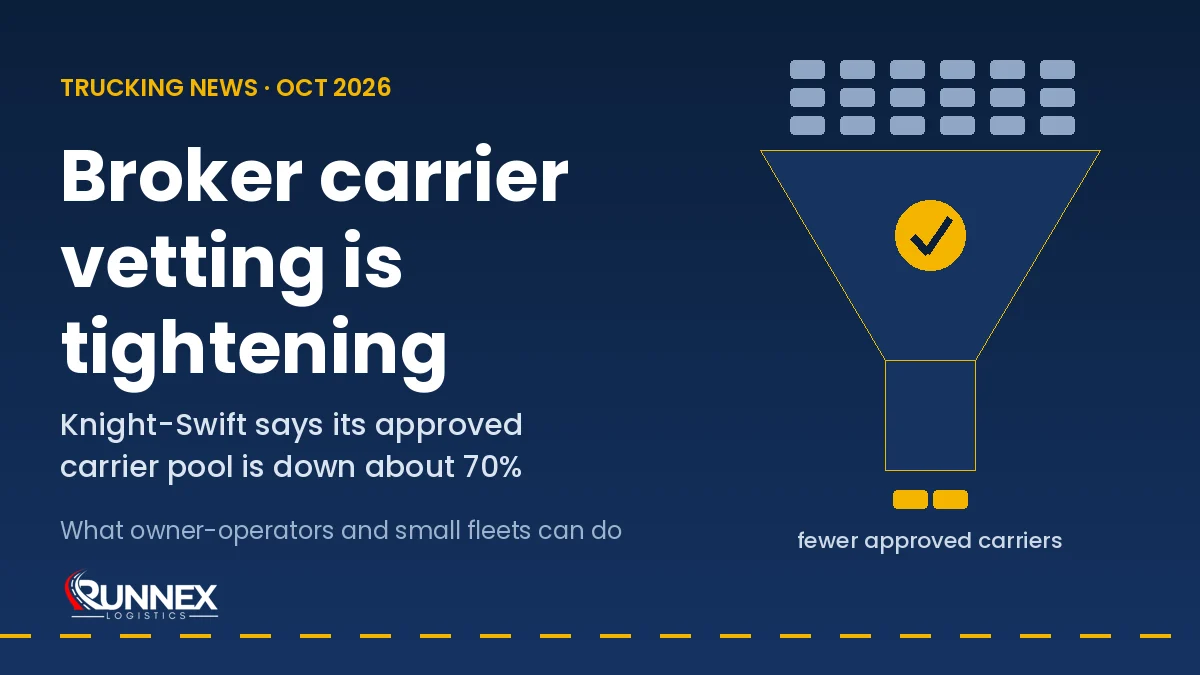
Broker carrier vetting just got a lot stricter, and small carriers will feel it first. On October 27, 2026, Knight-Swift CEO Adam Miller said its approved brokerage carrier pool is down about 70% in two years. He also said brokers now have legal “skin in the game” when they pick a carrier. So the bar to get loads is rising.
Key takeaways on broker carrier vetting
- Knight-Swift says its approved brokerage carrier pool is down about 70% from two years ago.
- The company also wants carriers to be active for at least one year before they haul its brokered freight.
- A May 2026 Supreme Court ruling lets negligent hiring claims against brokers move forward. As a result, more brokers are likely to tighten their rules.
What happened
Miller spoke at the WEX OTR Summit in Jacksonville, Florida, on Tuesday, October 27, 2026. According to FreightWaves, he said Knight-Swift is “down 70%” in approved carriers because it “really vetted the type of carrier” it wants. He pointed to cargo theft, which he said has moved from a few bad actors to organized crime.
He also shared one clear rule. Knight-Swift will not let a carrier into its brokerage network unless the carrier has been active for a year. In addition, he warned that a CSA score over the threshold is now a real risk for any broker. That makes broker carrier vetting a legal issue, not just a fraud check.
The legal reason is the U.S. Supreme Court decision in Montgomery v. Caribe Transport II, decided on May 14, 2026. In short, the Court held that federal law does not block state negligent hiring claims against freight brokers. So if a broker hires an unsafe carrier and a crash follows, the broker can face a lawsuit.
Knight-Swift is not alone. On the same day, FreightWaves reported that Landstar trimmed its approved carrier list from over 100,000 in 2022 to nearly 68,000. Most of those cuts came in 2023 and 2024 to fight cargo theft.
What it means for owner-operators and small fleets
Tighter broker carrier vetting is a supply story, not a demand story. Miller said capacity is shrinking while freight demand is still fairly weak. For carriers that pass the new checks, that can mean steadier freight and better rates. However, carriers that fail them may lose access to some of the biggest brokers.
New authorities will feel it most. If you have less than a year of history, some large brokers may reject you during broker carrier vetting. Spot market carriers with thin records, old insurance paperwork or high CSA scores are also at risk. Meanwhile, cargo thieves keep stealing real carrier identities. That is why we cover how to spot freight fraud in a separate guide.
The rules around drivers are getting tighter too. Our recap of FMCSA rule changes in 2026 covers the CDL and English proficiency changes. Brokers check those now too.
How to pass broker carrier vetting: 6 steps
- Check your own FMCSA record first. Look up your USDOT number on SAFER and read it like a broker would. Your address, phone, email and fleet size should match your carrier packet.
- Fix bad data fast. FMCSA said on October 16, 2026, that all 50 states now use its reformed DataQs review process. If an inspection or crash report is wrong, file a challenge now.
- Watch your CSA scores. Brokers are now treating scores over threshold as a legal risk. Clean pre-trips, working lights and good hours of service habits keep your record strong.
- Keep insurance current and easy to verify. Ask your agent to send certificates quickly. Also, make sure the names on your policy match your authority.
- Build a track record. If your authority is new, focus on brokers and shippers that do accept newer carriers. Then deliver on time, every time, so your history works for you.
- Keep a clean carrier packet ready. Have your W-9, authority letter, insurance certificate and banking details in one place. A dispatcher who handles broker setup packets can send these the same day.
How Runnex helps
Runnex Logistics has helped owner-operators and small fleets since 2014. Our truck dispatch services cover dispatching, broker setup paperwork, compliance support, invoice management and 24/7 driver support. In other words, we handle the packets and the broker calls. That way, you can focus on safe, on-time loads. We dispatch Dry Van, Reefer, Flatbed, Step Deck, HotShot and Power Only.
Frequently asked questions
What is broker carrier vetting?
It is the check a freight broker runs before giving you a load. Brokers usually look at your authority, insurance, safety record, CSA scores and how long you have been operating.
Why are brokers cutting their carrier lists?
There are two main reasons: cargo theft and legal risk. After the May 2026 Montgomery ruling, brokers can face negligent hiring lawsuits. So many now prefer carriers with longer, cleaner records.
Can a new authority still get broker loads?
Yes, but it may take more work. Some large brokers, like Knight-Swift, want one year of history. Still, many brokers do work with newer carriers that have clean records and current insurance.
Does a dispatcher help with broker vetting?
A good dispatcher keeps your carrier packet current, sends setup paperwork quickly and books loads with brokers that fit your profile. That saves time and helps you avoid rejections.
Want help getting set up with more brokers? Contact Runnex Logistics or call (574) 240 6239 for a free dispatch consultation.
Stay approved and stay loaded
Runnex Logistics keeps your broker packets, paperwork and compliance details in order, so your truck stays loaded. Explore our dispatch services for owner-operators or get a free quote.
Sources
- FreightWaves (Oct 27, 2026): Knight-Swift CEO says CDL crackdown could fuel lasting trucking recovery
- FreightWaves (Oct 27, 2026): Insurance claims adjustments tank Landstar’s otherwise strong Q3
- U.S. Supreme Court (May 14, 2026): Montgomery v. Caribe Transport II, LLC, No. 24-1238
- FMCSA press releases (Oct 16, 2026): All 50 states implement reformed DataQs review process
- FMCSA: SAFER company snapshot
2 Responses